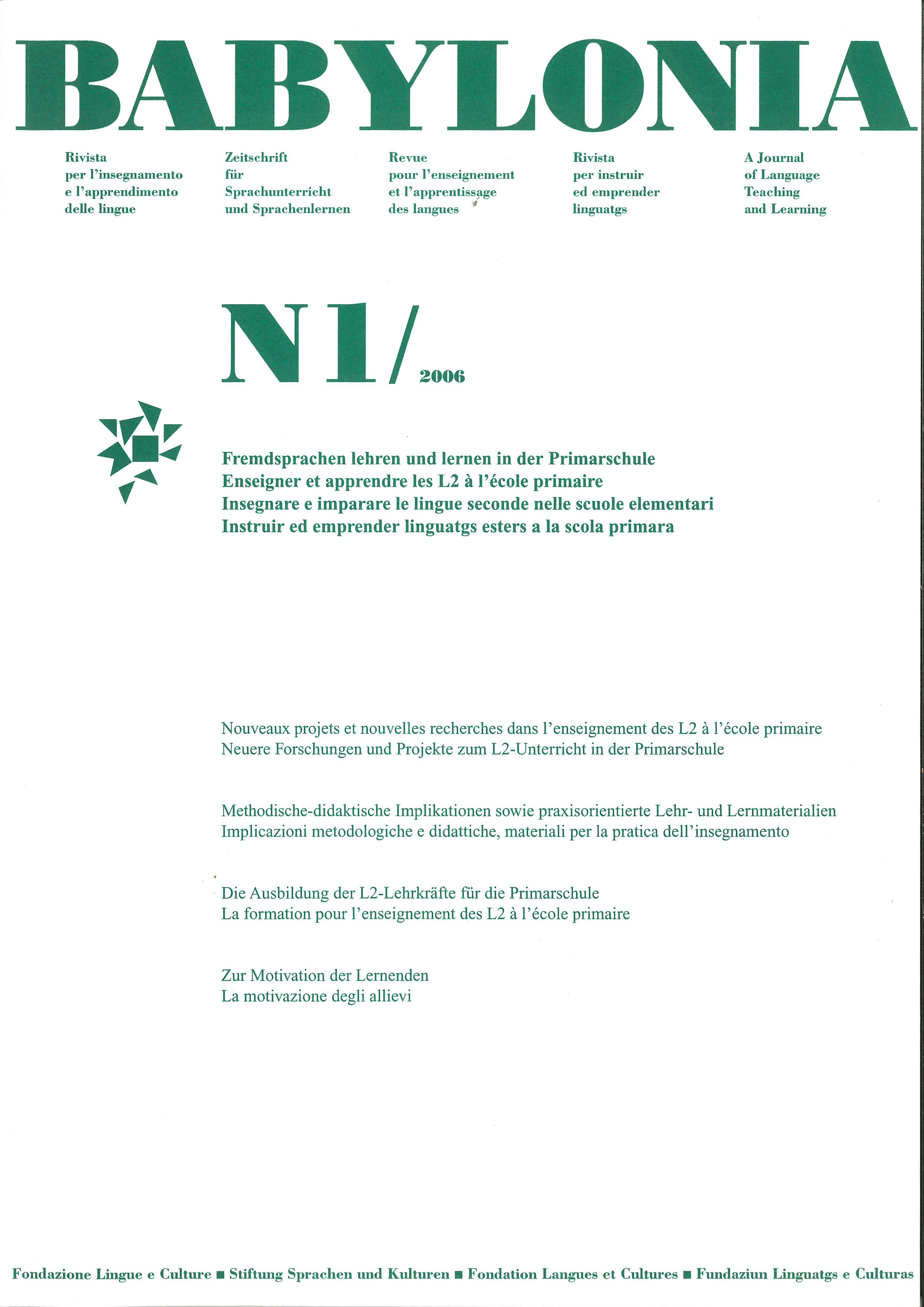
Teaching and learning L2s in primary school
DOI:
https://doi.org/10.55393/babylonia.v1i.645Keywords:
PDF, 1_2006Abstract
[Summary generated by Poe]
The 2006 edition of Babylonia focuses on the theme of teaching and learning foreign languages in primary schools. It explores various approaches, methodologies, and empirical studies related to early language instruction.
Key Contributions:
- Editorial: Highlights the decision in Schaffhausen to support the teaching of two foreign languages in primary schools, emphasizing the importance of multilingual education.
- Early Language Learning: Articles discuss the significance of introducing foreign languages at an early age, addressing both pedagogical strategies and the psychological aspects of language acquisition.
- Task-Based Learning: The journal emphasizes a task-based approach that promotes learner autonomy and engagement, integrating language learning with other subjects.
- Teaching Materials: Contributions include examples of innovative teaching materials designed to facilitate language learning and enhance student motivation.
- Evaluation Studies: Empirical evaluations, particularly in the context of English and French instruction, provide insights into student progress and effective teaching practices.
- Professional Development: The importance of ongoing training for language teachers is stressed, with recommendations for enhancing their skills and methodologies.
In conclusion, Babylonia 1/06 advocates for a comprehensive approach to foreign language instruction in primary education, highlighting the need for effective teaching strategies, supportive materials, and continuous professional development for educators.
Downloads
Published
2006-04-04
How to Cite
Teaching and learning L2s in primary school. (2006). Babylonia Journal of Language Education, 1. https://doi.org/10.55393/babylonia.v1i.645
Issue
Section
Full issue