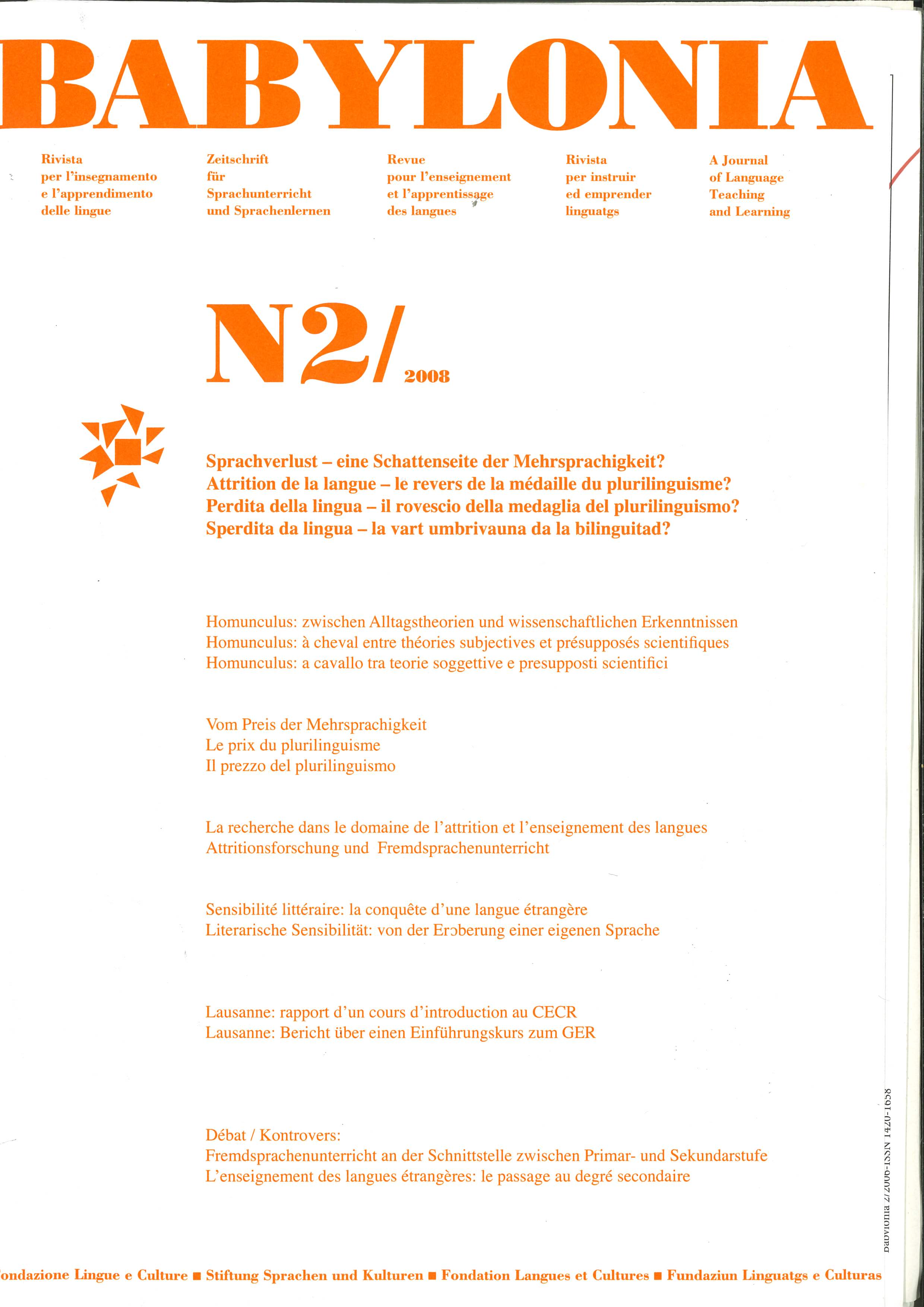
Language Loss – The Downside of Multilingualism?
DOI:
https://doi.org/10.55393/babylonia.v2i.647Keywords:
PDF, 2_2008Abstract
[Summary generated by Poe]
This edition of Babylonia explores the theme of language attrition, highlighting its implications for multilingualism and education. The contributions examine the nuances of losing a language and its effects on identity and communication.
- Editorial Overview: The editorial discusses the significance of language loss within the context of multilingualism, emphasizing the need to recognize both the benefits and challenges that come with bilingualism.
- Main Theme: The issue centers on language attrition, questioning how the loss of a native language affects individuals and their communities. It highlights the emotional and psychological impacts of losing linguistic proficiency.
- Contributions:
- Monika S. Schmid defines language attrition, describing it as a non-pathological decrease in proficiency due to reduced use and contact with the language community.
- Raphael Berthele discusses language use and loss as normal phenomena in multilingual contexts, arguing for a perspective that views both as part of the linguistic experience.
- Doris Stolberg and Rosemarie Tracy present a broader view of language loss, emphasizing the importance of recognizing the communicative potential of individual multilingualism.
- Experiences of bilingual speakers and their struggles with lexical retrieval and language mixing.
- Examination of language maintenance initiatives for Arabic among migrant children in Milan, highlighting the challenges of teaching Arabic in a diglossic context.
This edition serves as a resource for educators and researchers, providing insights into the dynamics of language loss and the importance of fostering multilingual competencies in educational settings.
Downloads
Published
2008-07-07
How to Cite
Language Loss – The Downside of Multilingualism?. (2008). Babylonia Journal of Language Education, 2. https://doi.org/10.55393/babylonia.v2i.647
Issue
Section
Full issue