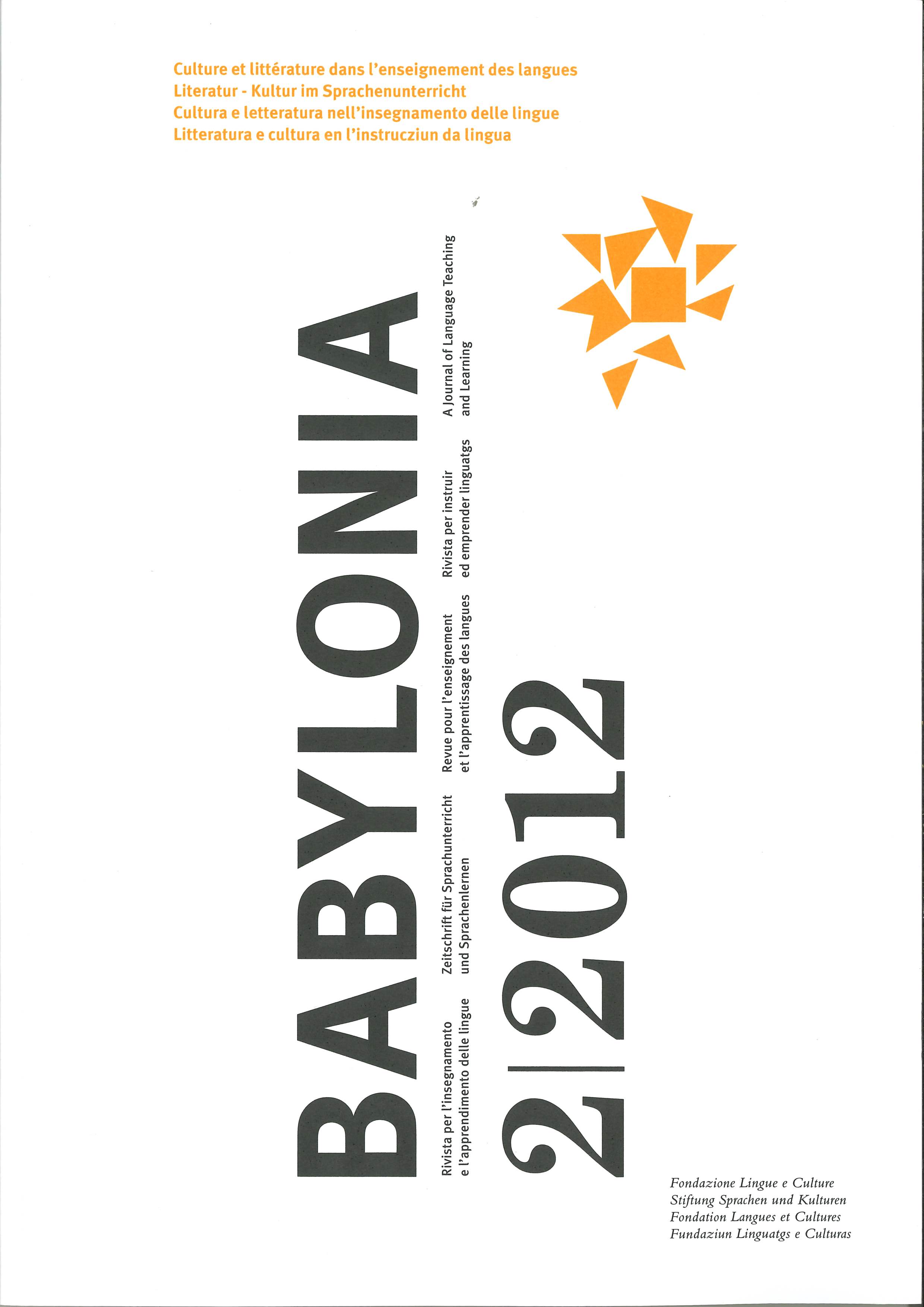
Culture and literature in language teaching
DOI:
https://doi.org/10.55393/babylonia.v2i.653Keywords:
PDF, 2_2012Abstract
[Summary generated by Poe]
Summary of Babylonia 02/12
The issue of "Babylonia" focuses on the interplay between language, culture, and literature in language teaching, particularly in the context of multilingualism and the integration of cultural content in both modern and ancient language education.
Key Contributions- Cultural Integration in Language Education: Several articles emphasize the importance of including cultural and literary content in language teaching. The authors argue that literature enriches language learning by providing context and fostering deeper understanding of cultural nuances. For instance, the integration of classical texts in modern language curricula is presented as a means to connect students with their cultural heritage.
- Literature as a Teaching Tool: The contributions explore various methodologies for incorporating literary texts into language classes. The use of narratives and storytelling is highlighted as a powerful pedagogical strategy that engages students and enhances their linguistic skills. This approach encourages students to relate personal experiences to the texts, thus fostering a more meaningful learning environment.
- Challenges in Teaching Ancient Languages: Articles discuss the ongoing relevance of Latin and Ancient Greek in education despite their precarious status in modern curricula. The authors advocate for the preservation of these languages, arguing that they provide essential insights into the foundations of Western culture and thought.
- Interdisciplinary Approaches: The issue advocates for an interdisciplinary framework that connects language learning with broader cultural, historical, and social contexts. This includes using literature from various genres and periods to illustrate the evolution of language and its connection to societal changes.
- Practical Applications: Practical examples of teaching strategies are provided, including the development of modules that integrate cultural themes with language instruction. These modules aim to engage students with content that is relevant to their lives, thereby enhancing motivation and interest in language learning.
- Future Directions: The issue concludes by calling for a reevaluation of language education practices, emphasizing the need for curricula that are adaptable and responsive to students' interests and cultural backgrounds. The authors stress the significance of fostering a love for literature and reading to combat the decline in engagement with traditional texts.
Overall, this issue of "Babylonia" underscores the importance of integrating literature and cultural content into language education. It advocates for teaching methodologies that not only enhance language proficiency but also cultivate a deeper appreciation for cultural heritage and intercultural understanding. The contributions reflect a commitment to enriching the educational experience for students through literature, thereby preparing them for a more interconnected and culturally aware world.
Downloads
Published
How to Cite
Issue
Section