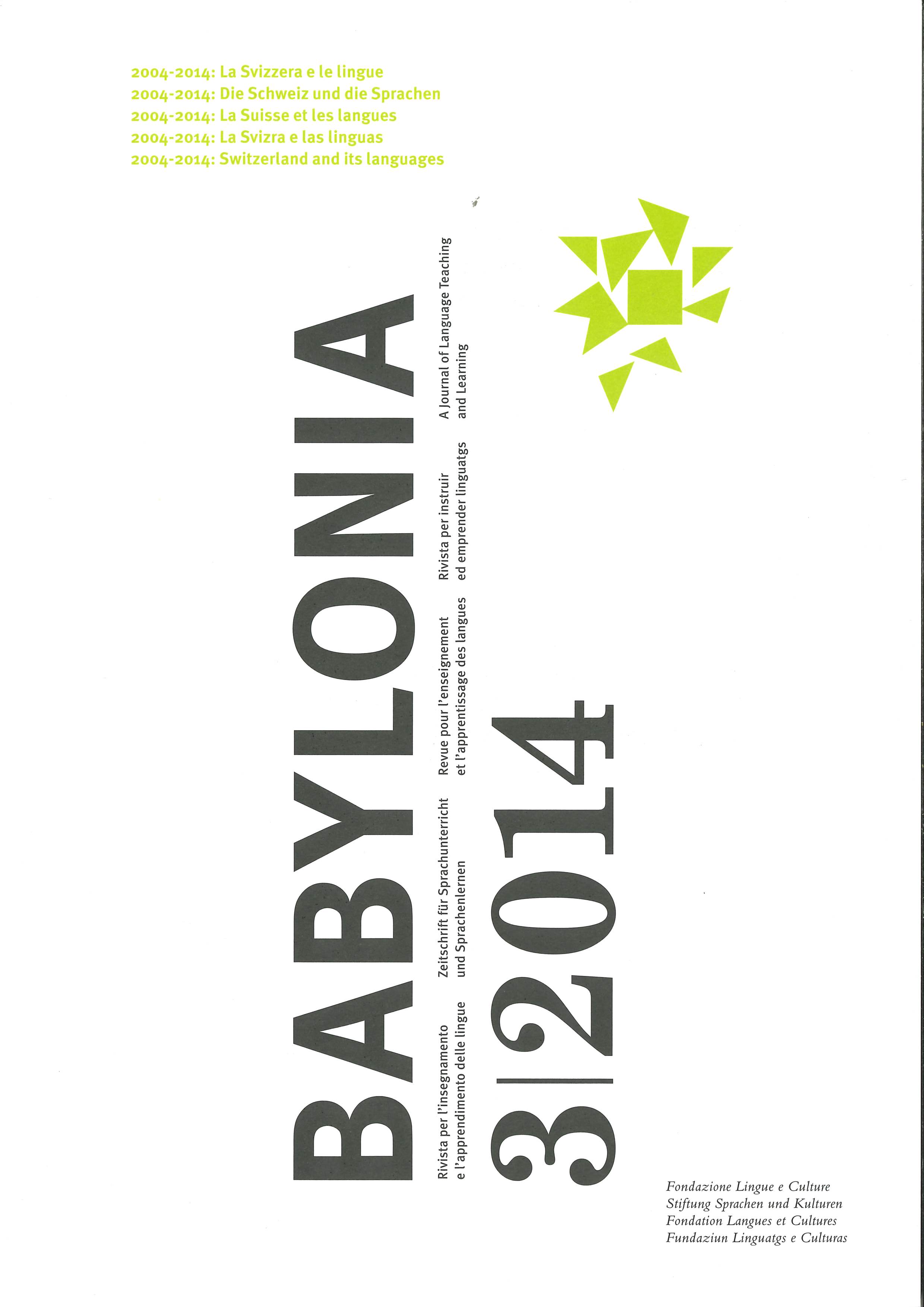
2004-2014: Switzerland and languages
DOI:
https://doi.org/10.55393/babylonia.v3i.673Keywords:
PDF, 3_2014Abstract
[Summary generated by Poe]
Overview
This issue of Babylonia focuses on the linguistic landscape of Switzerland over the past decade (2004-2014), exploring the challenges and dynamics of multilingualism in the context of education, culture, and society. It emphasizes the importance of languages as a fundamental aspect of Swiss identity and cohesion.
Key Contributions
- Historical Context:
- The introduction discusses the historical significance of Switzerland's multilingualism, tracing its roots back to the integration of various linguistic communities. The editorial reflects on the current political climate, highlighting the tensions between national identity and language diversity.
- Articles outline the evolution of language education strategies in Switzerland, particularly through the HarmoS concordat, which aims to ensure a coordinated approach to language learning across cantons. The establishment of a second national language in primary schools is emphasized.
- The issue discusses the role of intercultural exchanges in fostering understanding among different linguistic communities. It highlights initiatives that promote bilingualism and cooperation between French-speaking and German-speaking regions.
- Research findings indicate a strong public desire for enhanced language education. Surveys reveal that a majority of Swiss citizens believe that learning national languages strengthens national cohesion.
- Contributions examine how language shapes individual and collective identities in Switzerland. The complexity of integrating multiple languages into daily life and the educational system is addressed, emphasizing the need for an inclusive approach.
- The status of Rhetoromanic and Italian is discussed, particularly in the context of their diminishing presence in educational settings. The authors argue for increased support and recognition of these languages to promote cultural diversity.
- The issue concludes with reflections on the future of multilingualism in Switzerland, calling for a proactive approach to language policy that embraces diversity as a resource rather than a challenge.
Conclusion
The Babylonia 3/2014 issue presents a comprehensive analysis of multilingualism in Switzerland, highlighting its significance for national identity and social cohesion. It advocates for a renewed commitment to language education and intercultural understanding, recognizing the complexities and opportunities presented by Switzerland's linguistic diversity.
Downloads
Published
2014-10-10
How to Cite
2004-2014: Switzerland and languages. (2014). Babylonia Journal of Language Education, 3. https://doi.org/10.55393/babylonia.v3i.673
Issue
Section
Full issue