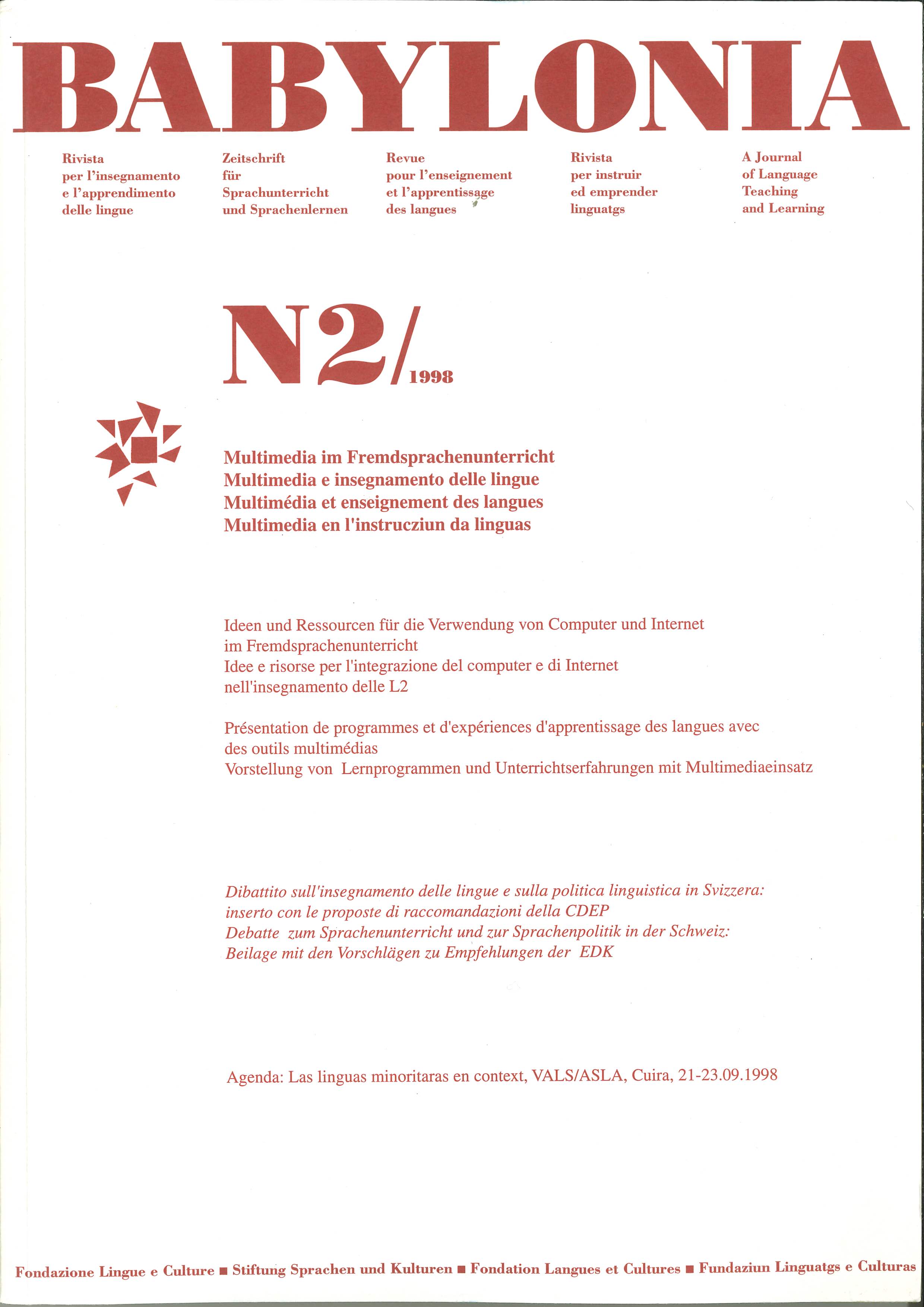
Multimedia and language teaching
DOI:
https://doi.org/10.55393/babylonia.v2i.594Keywords:
PDF, 2_1998Abstract
[Summary generated by Poe]
The second issue of "Babylonia" focuses on the topic of multimedia in foreign language teaching and contains contributions from various authors who explore different aspects of the integration of new technologies in language teaching.
Key topics covered include:
Use of Internet resources: Christian A. Gertsch discusses the educational possibilities of using the Internet in language teaching, emphasizing the importance of self-directed learning and interactive partnerships to stimulate student motivation.
Computers in teaching: Roland Näf-Piera describes how computer programs can be used effectively in language teaching in public schools, highlighting the need for educational software to be user-friendly, attractive and oriented to clear learning objectives.
Multimedia center: Laurence Vincent-Durroux and Cécile Poussard present the multimedia center of the Paul-Valéry University of Montpellier, which offers innovative approaches to teaching English and helps students familiarize themselves with new technologies.
VIFAX System: Michel P. Perrin presents the VIFAX system, a multimedia tool for improving language skills, based on authentic television content that helps learners develop their listening comprehension skills.
Tandem learning: Helmut Brammerts discusses the concept of tandem learning, where learners of different mother tongues work together to mutually improve their language skills and exchange cultural experiences.
The issue highlights the need for a critical analysis of new technologies and offers a wealth of practical advice and information for teachers. The aim is to promote the use of multimedia and Internet resources in language teaching and to help learners sustainably improve their language skills.
In summary, the second issue of "Babylonia" provides a comprehensive analysis of the challenges and opportunities related to integrating multimedia into language teaching.
Downloads
Published
How to Cite
Issue
Section