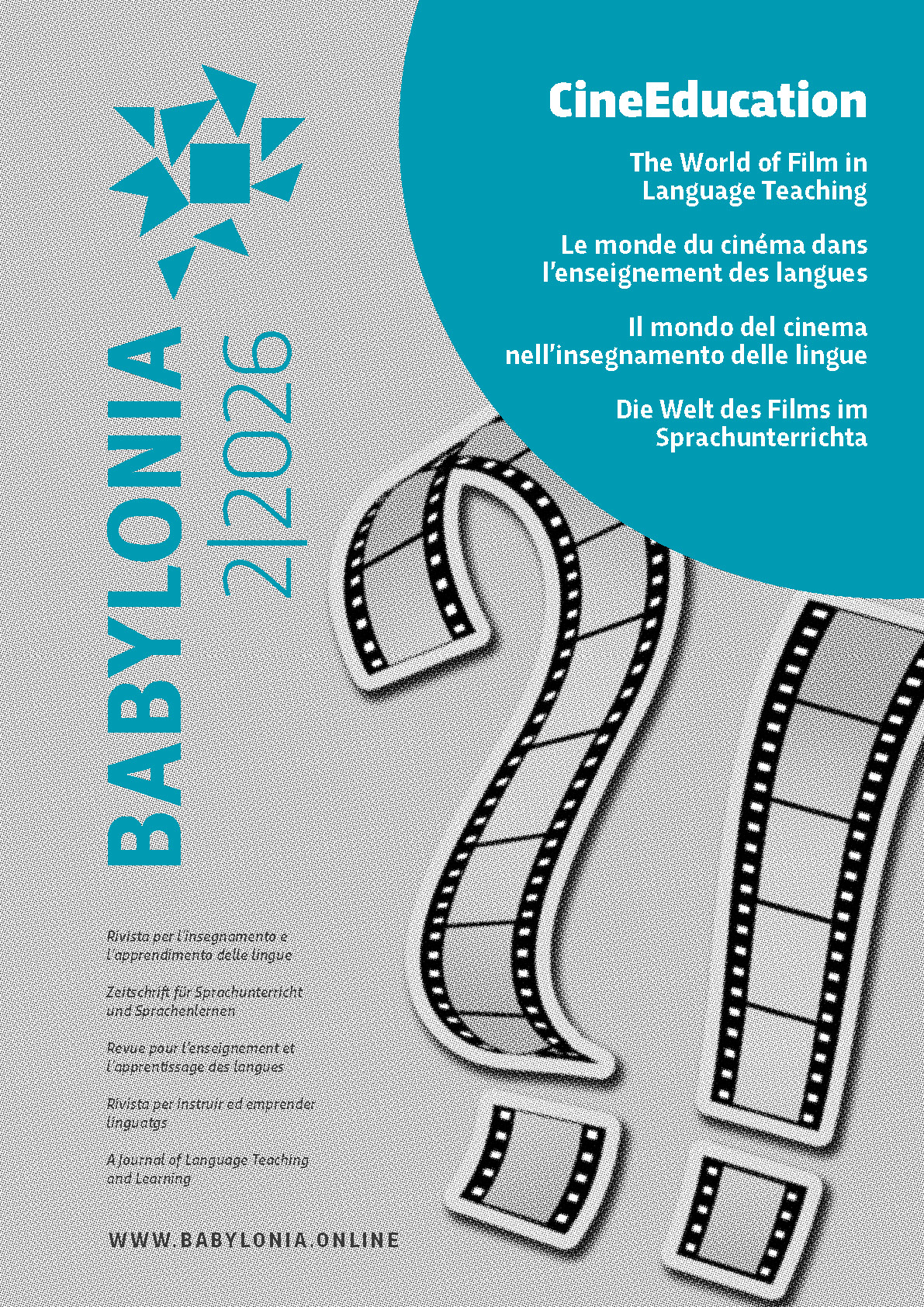
CineEducation: Il mondo del cinema nell'insegnamento delle lingue
Parole chiave:
PDF, 2/2026Abstract
Several contributions explore how film can open up spaces for critical reflection on social, cultural, and scientific issues. Mayer and Schwarz, in Windows and Mirrors: Approaching Diversity with the TV series Heartstopper, revisit the metaphor of films as both “windows” into other lives and “mirrors”. Wengler’s contribution, Feministischer Widerstand in virtueller Realität mit DRAW FOR CHANGE! We exist, we resist, takes this engagement further by examining the use of immersive media. The intersection of film and scientific literacy is explored in Gödecke’s analysis of the French mini-series Générations Carbone and Leonhardt and Thorbecke’s framework linking film literacy x scientific literacy.
These contributions remind us that it is not only what we do with films, but also which films we choose that matters, for example in Kyritsi’s article on using short films and clips to raise awareness of speech, language, and communication. La contribution de Porfiri Watch Me If You Can: intégrer la vidéo en L2 pour forger une conscience citoyenne propose un cadre méthodologique pour soutenir l'engagement des apprenant·e·s envers les contextes historiques, culturels et sociaux d'œuvres littéraires.
Some articles focus more explicitly on the how of language learning with film. In Girotondo, Arcuri shows how even beginner learners can become active producers through film-based activities. Altri contributi ci portano in mondi da sempre vicini, la letteratura e il cinema, sempre con un approccio focalizzato sui contenuti e le istanze sociali veicolate dalle opere d‘arte: L’articolo di Minisci illustra L'uso dell'input filmico nella didattica della letteratura italiana descrivendo attività in classe basate sul romanzo e il film “Sostiene Pereira”. Nel contributo di Falcone, Apprendimento linguistico e schermi: un percorso didattico tra letteratura, cinema e giustizia sociale, le attività si appoggiano al libro e film Como agua para chocolate. L’article de Favre explore la norme linguistique à travers une étude sur les représentations linguistiques dans les vidéos éducatives de FLE en contexte numérique en partant de la question « Tu veux parler comme un Français ? ».
A further thread running through this issue is the development of visual literacy - the need to realize that images, too, must be consumed with awareness. A fact that is perhaps not yet taken for granted even in our “image-driven society,”and in our classrooms.
Finally, this season‘s Teaching Taster, by Thorbecke, Gödecke & Leonhardt is entitled Lights, camera… and science! provides teachers with a structured way of combining scientific with film literacy. To conclude, we include a „Primula“ practical parts of Abitha Ranganathan‘s MA thesis entitled Anti-Bias Education Approaches to Visual Storytelling using Avatar:The Last Airbender which provides a useful framework for unpacking bias in film that can be used with secondary school learners.